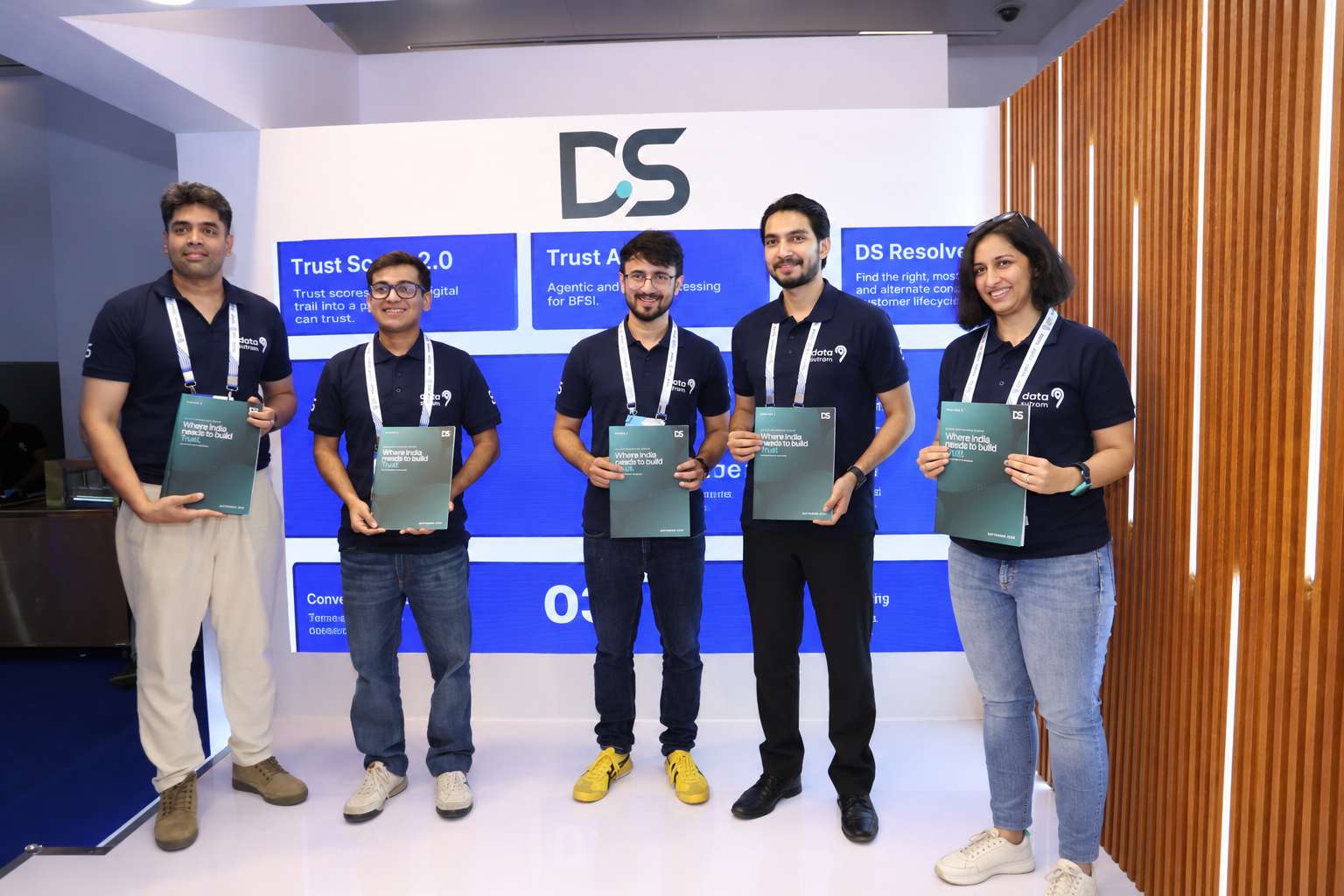
Mumbai, 07 October 2026: As India works towards its ambition of becoming a $30 trillion economy by 2047, the country will need to significantly expand its private credit ecosystem, while ensuring that credit reaches a broader and more diverse borrower base. These are among the key findings of FinSecure 2026, a landscape report released today by Data Sutram, the enterprise AI trust platform serving 40+ Indian banks and financial institutions.
According to the report, India’s private credit stock will need to grow from approximately $4 trillion to $45 trillion over the next 21 years, implying an annual growth rate of 12.2% in dollar terms. At 102.3% of GDP, India’s private credit remains below the UK (132.6%), US (140.3%) and China (200.8%), based on BIS data. The report highlights the need for India to expand credit penetration while strengthening the infrastructure required to assess and manage emerging risks.
Currently, only 28% of India’s 89 crore credit-eligible adults are borrowing. This leaves approximately 60 crore potential borrowers, including young consumers, micro-enterprises and rural households, with limited or no formal credit history.
The report highlights that traditional credit bureau data is inherently limited for first-time borrowers, as credit histories are built primarily through previous borrowing activity. At the same time, the share of new-to-credit borrowers has declined from 23.5% to 17.8% of originations over four years, according to CRIF.
“India has built world-class rails for identity and payments. The next step is to build equally robust rails for trust. Lenders need the ability to assess first-time borrowers while identifying fraudulent and mule accounts in real time. As India moves towards Viksit Bharat, trust infrastructure will play an increasingly important role in enabling responsible and inclusive credit growth,” said Rajit Bhattacharya, Co-Founder and CEO, Data Sutram.
Key findings from FinSecure 2026
1. Secured lending continues to face information and process gaps
The report identifies paperwork, limited information and lengthy processing timelines as key challenges in secured lending. Large-ticket credit applications often require extensive property, financial and legal documentation.
Of the 8.56 crore income tax returns filed in FY25, only 11.4 lakh were filed by companies and 16.6 lakh by firms. Further, only 41% of MSMEs have accessed formal credit, highlighting the information gap that continues to affect credit assessment.
2. Fraud risks are becoming increasingly sophisticated
India’s suspected digital fraud rate stands at 7.1% of transactions, compared with the global average of 3.8%, according to TransUnion. The Indian Cyber Crime Coordination Centre (I4C) recorded ₹22,495 crore in losses across 28.15 lakh complaints in 2025, with investment scams accounting for 76% of the value.
The report highlights the growing sophistication of fraud networks, including the use of mule accounts, synthetic identities and organised scam infrastructure. As financial transactions become increasingly automated, financial institutions will require real-time capabilities to identify and prevent fraudulent activity.
3. Gen Z represents a significant new-to-credit opportunity
Gen Z accounts for half of new-to-credit-card consumers. While the segment represents 34% of the eligible population, credit penetration remains at 16%, highlighting significant potential for responsible credit expansion.
4. Rural credit access requires solutions beyond smartphone-led journeys
The report notes that 46% of new-to-credit consumers now come from semi-urban or rural India. At the same time, more than 25 crore Indians continue to use feature phones, with most relying on 2G networks, according to IDC and Counterpoint.
The report also highlights changes in the microfinance sector, which saw 1.8 crore borrowers exit between June 2024 and March 2026. During the same period, average ticket sizes increased by 23%, while PAR 180+ tripled to 16.3%. These trends underline the need for credit and servicing models that can operate across a wider range of devices and consumer contexts.
Four areas where AI can transform financial services
1. Real-time large-ticket lending
Consent-based data from the Account Aggregator ecosystem, GST records and bank statements can help address information gaps for borrowers without extensive formal records. The report notes that the Account Aggregator ecosystem has crossed 538 million consents.
AI agents can further support document verification, due diligence and credit memo preparation, reducing processing time and enabling more automated lending journeys.
2. Real-time fraud detection
AI can enable financial institutions to move from post-transaction fraud reporting towards real-time risk intelligence. This includes identifying mule accounts before transactions occur, detecting synthetic identities during onboarding and distinguishing legitimate activity from automated or fraudulent transactions.
The report notes that the Supreme Court has directed the RBI to issue a Standard Operating Procedure for mule accounts, highlighting the increasing focus on coordinated fraud prevention.
3. AI-led underwriting for Gen Z
AI can assess behavioural and alternative signals during a transaction, enabling credit decisions to be integrated into the purchasing journey rather than requiring a separate application process.
4. Voice-based financial services for rural India
For consumers who rely on feature phones, voice can provide an alternative interface for financial services. Voice AI in local languages can support application processes, verification, repayment communication and customer servicing without requiring an app or smartphone.
The report also highlights the potential of voice-based engagement to improve the economics of servicing smaller-ticket borrowers, particularly where field-based collection models remain costly.
Introducing the FinSecure Index
FinSecure 2026 also introduces the FinSecure Index, a five-level framework that assesses the evolution of financial trust capabilities — from point-in-time bureau assessment to continuous, agentic trust.
The framework includes a diagnostic that enables chief risk officers to assess their organisation’s current trust capabilities.
The report draws on interviews with eight CXOs across Indian banking, fintech and consulting as part of Data Sutram’s Trust Dialogues series, proprietary Trust Score inquiry data across seven lenders, and public data from RBI, BIS, IMF, CRIF, TransUnion CIBIL and Sahamati.
The full report is available at:
https://projects.datasutram.com/ds_finsecure_report_2026.pdf
About Data Sutram
Started in 2020 and headquartered in Mumbai, Data Sutram builds Trust AI, an enterprise AI trust platform for India’s financial sector. Its three products are Trust, an agentic platform that automates bank back-office work; Auth, a risk intelligence platform built on alternative data and proprietary models, including Trust Score 2.0; and Echo, a voice-agent platform for customer conversations and collections. Data Sutram is backed by Lightspeed and B Capital and serves 40+ financial institutions.