Hyderabad, 30 October 2026: Before they set out, students of Keystone School were asked one question: what would you want to understand about a village beyond seeing it?
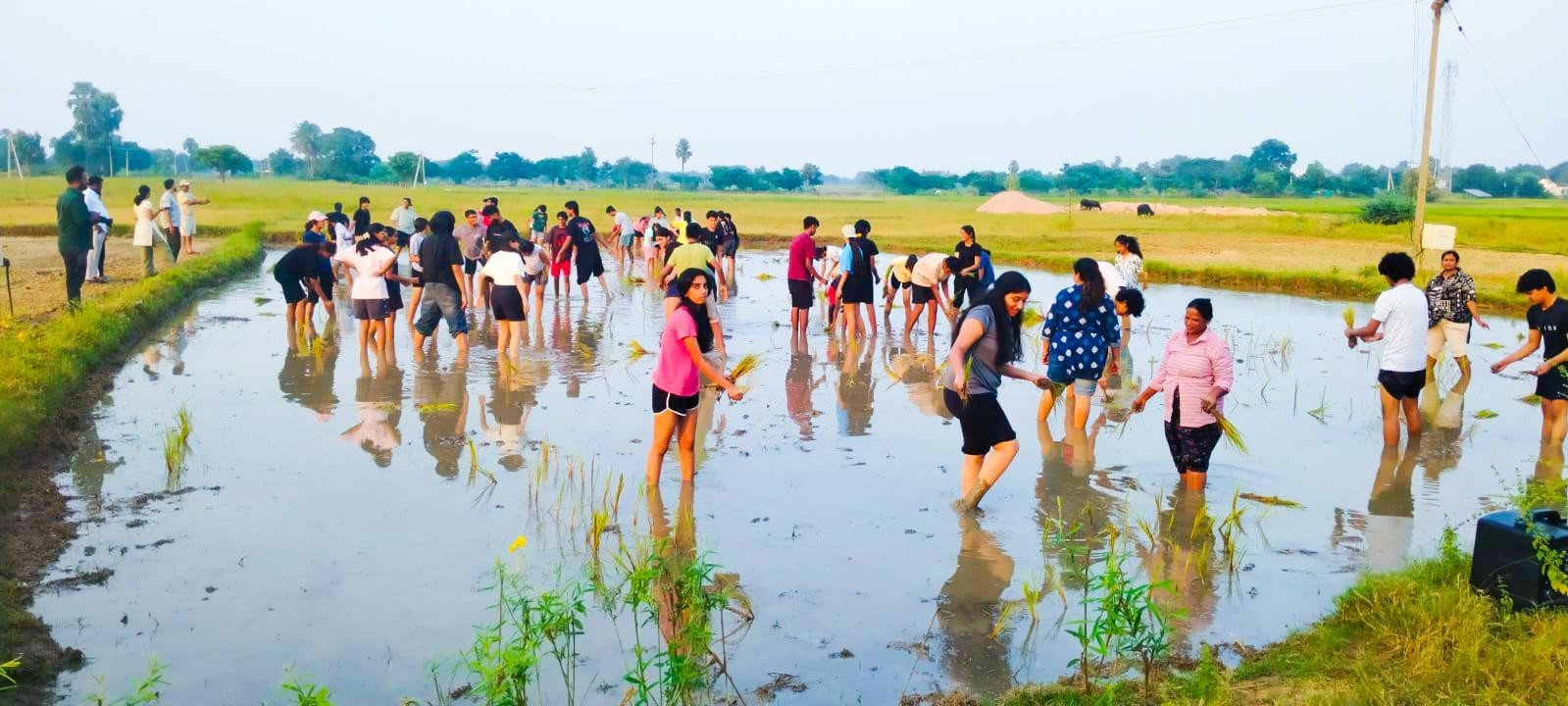
From 25 to 29 October, 56 students from Grades 9–12 explored that question in villages across the Warangal region and the handloom town of Pochampally. They sat with farmers, met women who run their own dairy cooperative, listened to tribal families and watched weavers work.
For Keystone School, which offers Cambridge and IB curricula, the programme connects classroom learning with life beyond school. A conversation in a field or beside a loom can become the starting point for independent research, a student project or further community engagement.
Keystone designed and led the Rural Immersion Programme, with Bala Vikasa facilitating village access and coordinating community interactions. It gives students a starting point for the kind of learning Keystone develops through The Idea Loom, its framework created by Founder and Director Srilakshmi Reddy. Students encounter people and situations firsthand, examine their assumptions and identify questions they want to pursue. Back at school, those questions can develop into research or ideas that students build, test and revise through their Passion Projects. The immersion gives that work a grounding in people’s lives.
“Students need time to understand what they are seeing. A farmer or a weaver makes decisions that draw on years of experience. We want our students to recognise that knowledge, ask better questions and follow those questions when they return to school,” said Srilakshmi Reddy, Founder and Director of Keystone School.
Learning from the people who keep a village running
In the fields, farmers walked students through their tools and the decisions that shape a season: when to sow, how far apart to plant and what to do when the rain comes late. Students also visited Primary Health Centres, government schools and gram panchayat offices to understand how local institutions serve rural families.
At the Mulkanoor Women’s Cooperative Dairy, they met women who own and run the enterprise. The visit offered a closer look at how members organise a business together and how that business supports their livelihoods.
These encounters gave students examples of ingenuity already at work. Farmers adapt to uncertain conditions. Cooperative members make decisions together. Understanding those choices required students to look beyond their first impressions.
“Communities have a great deal to share about how they manage resources and work together. We help students meet people and have conversations through which they can understand village life more closely. Respect and a willingness to listen are important to that exchange,” said Shoury Reddy, Executive Director of Bala Vikasa.
The knowledge behind a craft
In Pochampally, students watched weavers mark, tie and dye threads before setting them on the loom. They saw how much of a pattern must be worked out before the weaving begins.
“This is a generational art form, and the weavers are keeping it alive. Its patterns are mathematically calculated. Weaving begins with marking the thread, and that takes great accuracy and focus,” said Shruti, a Grade 11 student.
The week also included time with tribal families and visits to Ramappa Temple and the Thousand Pillar Temple. Students encountered different ways of preserving knowledge through work, buildings and community traditions.
“What struck me most in the tribal villages is that it isn’t the resources or devices we own that matter. What matters is that we have each other, and the skills and feelings it takes to live together,” said Shreyas, a Grade 10 student.
Local experiences opened questions with a wider reach. Decisions about irrigation connect with water security; the work of a handloom weaver raises questions about livelihoods, cultural identity and changing markets. Students had specific people and experiences to return to as they explored those questions.
Questions that travel back to school
Every evening, students spent two hours with teacher-mentors, working on group projects that included documentaries, books, reels and research reports. They had to decide what deserved closer attention and how to explain what they had learned.
Mentors pushed them beyond observations such as “the farmer works hard” towards the decisions the farmer made and the reasons behind them. Students also had to consider whether their notes supported their conclusions and whether they were representing someone else’s experience fairly.
That work continues after the trip. Questions gathered in the field can develop through Keystone’s Passion Projects, which students pursue over one to two years through research, expert guidance, experimentation and revision.
Students can pursue these questions through the Cambridge International Project Qualification (CIPQ), or explore opportunities for reflective engagement and action through IB’s Creativity, Activity, Service (CAS).
For Keystone, this is an important part of learning to innovate: recognising what people already know, understanding the choices available to them and taking responsibility for the ideas students develop.
The students left Hyderabad with a question about understanding a village. They returned with more questions about the people they had met and the task of deciding which ones to pursue.
About Keystone School
Keystone School, Hyderabad, offers the IB and Cambridge curricula and combines academic rigour with real-world learning. Its learning framework, The Idea Loom, developed by Founder and Director Srilakshmi Reddy, blends inquiry, empathy and innovation, and has students design systems, build prototypes and create original work.