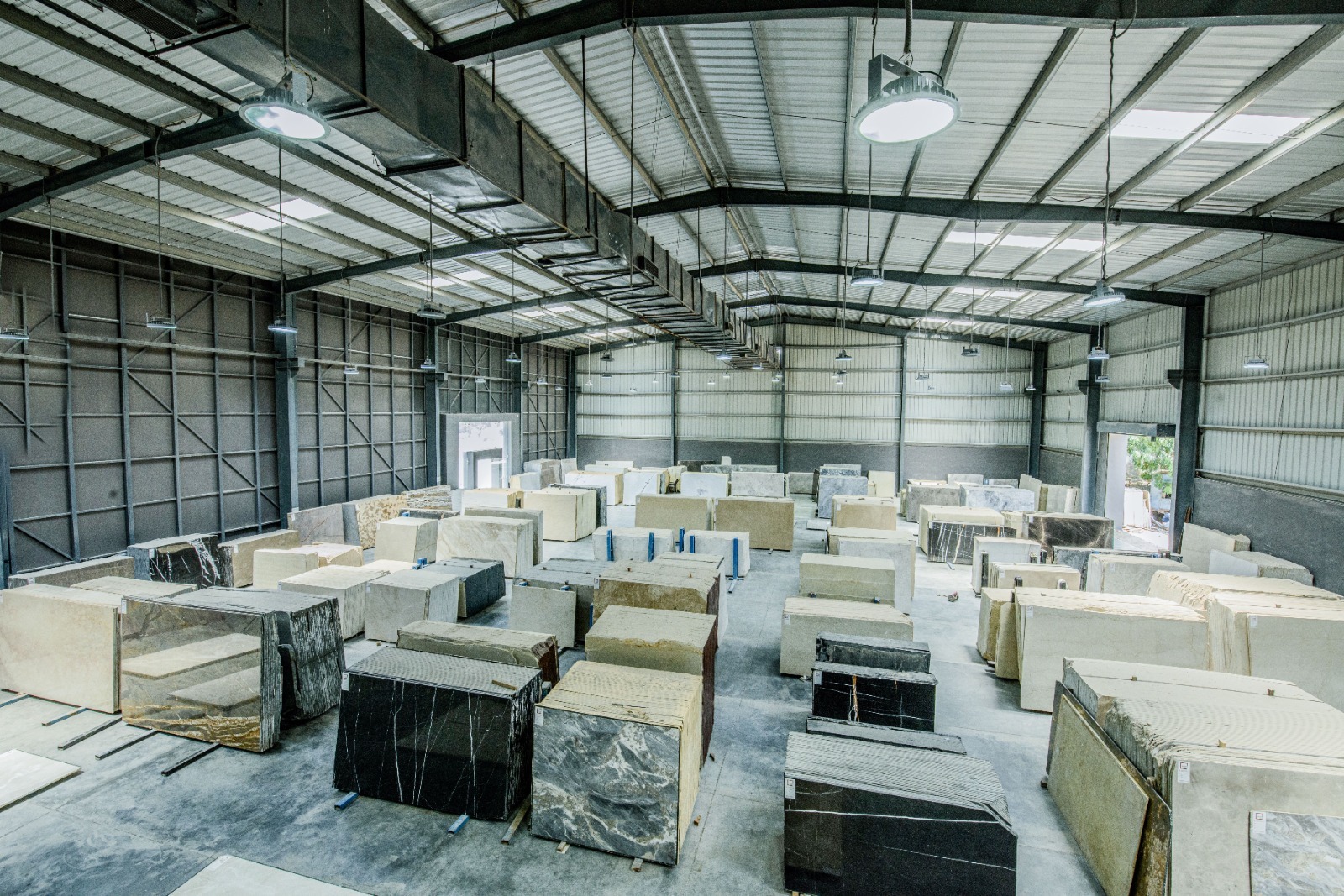
When you are inside a luxury stone showroom, it is easy to get fascinated with everything that you see there. The brilliant whites, the dramatic grey veins, and the glossy finish of premium white marble look absolutely stunning under the lights. If you are building your dream home or designing a high-end commercial space, you might point to a slab and think it is the perfect fit.
But buying marble based entirely on looks is one of the biggest and most expensive mistakes you can make.
Right now, a major issue is quietly running through the natural stone market: the misrepresentation of African white marble as premium European white marble. Many suppliers are marketing African white marble as if it were premium Italian or Portuguese stone. Because it bears a strong visual resemblance, buyers are led to believe they are purchasing a high-performance European material, paying a premium price for something that will not hold up the same way over time.
The Hidden Risks of Buying Stone by Appearance Alone
Here is what is really happening behind the scenes and how you can protect your investment by looking past the surface.
Not All White Marble Are Same (Even If They Look Identical)
The core of the issue is the assumption that a pure white stone is universal in its quality. Two slabs can look almost identical to the untrained eye while being completely different under a microscope.
Because certain African white marbles naturally mimic the visual appeal of authentic European stones, they are frequently mislabeled. Not knowing the difference, buyers install these stones in their homes, offices, and commercial spaces, only to watch them change. Over time, this lower-quality African white marble proves to be much more susceptible to yellowing, surface deterioration, or cracking. Within just a few years, a beautiful luxury investment can end up looking stained and structurally damaged.
One of the Most Important Quality Indicators: Calcite Content in Marble
To truly understand the durability of white marble, you have to look at its chemical breakdown, specifically, its calcite (calcium carbonate) content. Calcite is what actually gives high-grade marble its strength, bright white look, and chemical stability.
If you look at premium European white marbles like Italian Statuario or Portuguese Estremoz, they are almost entirely made of it, with a calcite content that easily clears 90% or even 95%. This high score of purity means the stone is dense, stable, and highly resistant to environmental reactions. It won't absorb moisture easily, it won't react negatively with installation adhesives, and it will resist cracking and yellowing for decades.
In sharp contrast, some African white marble has a significantly lower calcite content, often falling below 60%. The other 40% of the stone is just a loose mix of random minerals and impurities. The moment these impurities touch oxygen, cleaning water, or installation adhesives, they trigger a chemical chain reaction.
Because the stone lacks a solid backbone of stable calcite, it doesn't age well. It wears down fast, which is why you quickly end up with ugly discoloration and deep structural cracks.
Geology Matters: The Science Behind the Stone
Although two stones may look exactly the same, they can perform very differently after installation. The reason is simple: geology. A stone's mineral composition, strength, durability, and long-term performance all depend on where and how it was formed.
Marble forms naturally over millions of years under intense heat and pressure. The location where it forms determines the minerals locked inside the stone. Genuine European marbles are created in unique geological conditions that produce strong, tightly packed crystals. Choosing stone based on its geological origin means choosing reliability and lasting performance, not just a surface that looks good for a while.
Quarries Matter: Centuries of Proven Consistency vs. Unproven Mines
Another factor that many suppliers fail to mention is the history of the quarry itself. A proven quarry provides a track record that eliminates guesswork.
Many European marble quarries have operated for centuries. Generations of stonemasons, architects, and geologists have studied these exact deposits. We have hundreds of years of real-world evidence showing exactly how these European stones behave over generations. You know precisely what an Italian Statuario floor will look like 50 years from now because history has already proven its quality and consistency.
In contrast, many African white marble quarries are only 5 to 10 years old. They have a much shorter production history and a very limited long-term performance record. Buyers who purchase these unproven stones are essentially running a gamble in their own homes, testing a material that has no historical track record of how it will age.
Customer Education: The Critical Questions You Must Ask
You do not have to fall victim to misrepresentation. As an educated consumer spending hard-earned money, it is time to shift your focus from pure appearance to verifiable facts. Before you sign any cheque or finalize a stone delivery, make sure to ask your supplier these four essential questions:
- Can you provide the Certificate of Origin for this stone? Every legitimate batch of imported marble comes with official paperwork. You need to know exactly which quarry and country this stone comes from. If the seller cannot or will not produce this certificate, walk away.
- Are all white marble the same? Use this question to gauge the honesty of your supplier. A reputable dealer will immediately explain the differences in grading, density, and mineral types rather than telling you "they're all pretty much the same."
- What is the stone's mineral composition and calcite content? Ask to see the technical specification sheet for the specific block or batch. Look for a verified calcite or calcium carbonate level. If it is below 90%, you are looking at a stone prone to long-term issues.
- What is the history of this stone being used? Ask for projects where this specific stone from this exact quarry has been installed for more than 20 years. If the quarry has only been open for a decade, they won't be able to provide it.
Marble is meant to last a lifetime. By asking the right questions and prioritizing geological origin and calcite purity over surface looks, you can ensure that your stone retains its breathtaking beauty for generations to come.